


Updated: Feb 7, 2022
(This will be updated with links and new events as they come.)
Thur. Oct. 4, 7 p.m. – New England College (Henniker, NH) in the Great Room Fri. Oct. 5, 4:15 p.m. – Bates College (Lewiston, ME) Tue. Oct. 9 – Colby College (Waterville, ME) Wed, Oct. 10, 5:30 p.m. – University of Southern Maine (Portland, ME) in 165 Science Bldg Thur. Oct. 11, Noon – Tufts (Boston, MA) Sat. Oct. 13, 4:00 p.m. – Haystack Book Festival (Norfolk, CT) Mon. Oct. 15, 4:00 p.m. – The New School (NYC) Tue. Oct. 23 – Paul Smith’s College (Paul Smith, NY) Wed. Oct. 24 – Colgate University (Hamilton, NY) Fri. Oct. 26 – Proctor Academy (Andover, NH) Sun. Oct 28, 4 p.m. – Narberth book shop (Narberth, PA) Mon. Oct. 29 – Rosemont College (Bryn Mawr, PA) Thur. Nov. 1 – Rider University (Lawrence Township, NJ) Mon. Nov. 5 – Susquehanna University (Selinsgrove, PA)
Wed. Nov. 7 – Rutgers (New Brunswick, NJ) Thur. Nov. 8 – Salve Regina (Newport, RI) Mon. Nov. 12 – Smith College (Northhampton, MA) Wed. Nov. 14 – College of the Holy Cross (Worcester, MA) Thur Nov. 15 – Franklin Pierce (Rindge, NH)
Updated: Feb 7, 2022
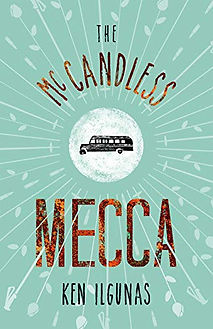
In 2013, I self-published a 15,000-word tiny book called The McCandless Mecca. It's about my hike to the magic bus of Alaska's Stampede Trail, where Chris McCandless from Into the Wild died. It's one of my favorite pieces of writing, and I'm happy to announce that it's just been re-released in paperback form, with a new cover from artist Astrid Jaekel, eighteen B&W photos from Josh Spice, interior design by David Dalton of Acorn Abbey Books, and an afterword from me, with which I reflect on Carine McCandless's The Wild Truth, a recent tell-all memoir about the McCandless family that had me rethinking who Chris was and what motivated him. The Kindle is $3 and the paperback is $7.
Here's an excerpt:
There is something telling about Alaskans’ disgust with McCandless. It’s true that, because of McCandless, Alaskans have had to pay for costly rescues (and their disgust, in this regard, seems justifiable), but there’s more to their disgust than the mere waste of taxpayer dollars and the annoyance of having to deal with all these so-called idiots. It’s a disgust that’s too angry, too bitter, tooborderline violent. There is something about McCandless’s story that challenges the locals’ identity, their self-image, their very “Alaskanness.”
Despite the popular perception of Alaska as virgin country inhabited by flat-stomached Jeremiah Johnsons who hunt animals on foot and live in sod-roofed log cabins, the real Alaska and the real Alaskan are actually quite ordinary: airport-sized Walmarts, vast grids of suburban sprawl, appalling obesity and all.
They are a people plagued with paradox. Alaskans pride themselves for their independence, yet 93 percent of the labor force hold full-time nine-to-five jobs. They have fierce relationships with nature, yet two-thirds of them live in urban environments. They’re expert outdoorsmen and women, yet on most of their outdoor excursions they’re straddling some smelly motorized machine. They’re anti-government, yet Alaska receives the most federal funding per capita than all other states ($20,351.13 per resident, which is more than twice the national average, according to a 2010 New York Times article). They’re radically self-sufficient, yet they pay the lowest state and local tax rates in the nation largely because of revenue from the oil industry. And because Alaska has the highest turnover rate, most Alaskans are hardly Alaskan (only 41 percent having actually been born in the state, according to a 2018 report). Born in the state or not, they consider Alaska “their” land, ardently guarding it from the federal government and meddling environmentalists who try to curb the state’s exploitative policies. Yet their “possession” of the state and all of its resources is arguable since their family roots in the state run, at the very most, a couple of generations deep (excepting, of course, the Native and Inuit populations, who, as it turns out, do not seem to be at all bothered by the whole McCandless dilemma and aren’t incredibly enthusiastic about industrial development).
Into the Wild works as a book because it is, by all standards, a tragedy. McCandless’s death was so fraught with symbolism, significance, and — in an abstract sort of way — sacrifice, that it was a work of literature even before Krakauer put it to page. It works as a tragedy because there is great meaning in the protagonist’s misfortune, a bright glitter of beauty in the black gloom of death. McCandless, when he went to live in that bus at the age of twenty-four, was the epitome of youthful spontaneity and adventurousness and idealism, almost to the point of allegory. He died before he could go to grad school, before he could get a job, before he could buy a home, marry a pretty wife, remodel his basement, subscribe to TheWall Street Journal, and question if his quest for money and things lent his life as much meaning as the adventures he’d lived out as a younger man. The best tragedies — like Into the Wild — are actually quite un-tragic. If Romeo and Juliet hadn’t died in the name of love, they surely would have been subjected to the unforeseen unpleasantries of matrimony: pubic hairs left on bars of soap, spiteful toilet lid policy infractions, insufferable in-laws, etc. Instead, they died in a moment of extreme devotion and passion and belief—at the very height of human existence. Because they died before they could fall out of love, their death isn’t a tragedy; it’s a mercy.
When McCandless died, he, too, died with his idealism. His death was unfortunate — obviously — but it’s also a mercy that McCandless wouldn’t come back to civilization to be jaded by age, corrupted by money, and bothered by an enlarged prostate. And from his death, a symbol is born. As Romeo and Juliet are to love, Chris McCandless is to absolute freedom, to principled self-reliance, to uncompromised individuality, to chasing your dream with everything you’ve got, even at the risk of death.
Many people move to Alaska to reinvent themselves in a rugged landscape. Some might live in a dry cabin for a couple of years, but most will end up either leaving the state, seizing a well-paying job opportunity, or buying a home in Fairbanks or Anchorage so they can again savor the comforts and conveniences they’d momentarily done without. There’s nothing wrong with any of this, as comfort and security and domesticity seem to be human longings as natural as the desire to leave it all and take to the open road. Yet McCandless’s story pricks a sensitive nerve. Alaskans call McCandless stupid and suicidal and feel something close to hatred for him because he went into the wilderness unprepared. But they don’t really hate him because of his unpreparedness. (Who could hate anyone for being unprepared?) They hate him, rather, because he lived alone, off the grid, killed his moose, and almost made it out alive. They hate McCandless because his uncompromised nature reminds them of their compromised lives. Because he out-Alaskaned the Alaskans.


Updated: Mar 13, 2022

Listening
The Wilderness – Jon Favreau the former speechwriter for President Obama, gives a history of the Democratic party, a diagnosis of what went wrong in 2016, and, with the help of experts, voters, and politicians, a plan of action. As an analysis and a history, I think the podcast does a really good job. But as we run through the Democratic party’s laundry list of problems, not to mention the varied interests of the different groups that make up the Democratic coalition, I find myself growing increasingly worried, and I’m not seeing a clear way out of the wilderness. But that’s why it’s called “The Wilderness”: I suppose the goal of the podcast is to bring in lots of different perspectives and reflect on the party’s issues. Something tells me, though, that I may leave the podcast with more worries than I came in with. The Democratic party has problems that are many and deep: in branding itself; in dealing with a stupid electorate (who wants universal healthcare yet doesn’t); and in dealing with an intransigent Republican party that does a good job at making the Democrats look bad. Right now, going into the 2018 elections, all they have to work with is anti-Trump fervor and the reputation of being the less corrupt party. I’d be surprised if they have a unified message going into 2020.
Longform Podcast interview with Nathaniel Rich – This podcast interview compelled me to read Rich’s New York Times Magazine piece on climate change, which took up the whole issue, and which I initially put to the side because climate change stories depress the hell out of me. I thought about this a good deal: Here I am, someone who wrote a book partly about climate change, and I’m not at all eager to read an important story on climate change. This got me thinking of the average reader, who is probably even less willing to the read this story. Climate change is, I think, increasingly something we try to keep out of sight and out of mind. I think if we had a more proactive approach to the problem, we’d do better to face our fears in the face, but so long as our government does next to nothing, we have cause to sweep our shame, fear, and disappointment under a rug of apathy.
Anyhow, I liked how Rich handles his subject with care (both in the podcast and article), but also with unwavering moral clarity. In the interview, he dutifully condemns the modern-day Republican party and fossil fuel companies for their self-interested and unforgivable distortion of the truth.
Revisionist History – I binge-listened to seasons two and three, which are remarkable. Gladwell has a knack for finding one interesting story or character and then zooming out to tell a broader story about the country.
The Rewatchables (Silence of the Lambs, Jerry Maguire, and Any Given Sunday) – I really enjoy listening to Bill Simmons and his smart friends break down popular nineties movies.
Watching
Who Is America?, Showtime – I have a weakness for Sacha Baron Cohen. My favorite character is Dr. Nira Cain-N’Degeocello, a self-hating cisgender gender studies professor at Reed College, whose function is to expose the ridiculous extremes of the far left and the out-of-touchness of his gullible right-leaning subjects. I’m not sure if I get much out of his Billy Wayne Ruddick Jr. character. The utility of Cohen’s movies and shows is in exposing the ridiculousness of our thought leaders; with Billy Wayne, Cohen makes them look reasonable. (i.e. Corey Lewandowski)
Death of Stalin – As a big fan of Veep, The Thick of It, and In The Loop, I was really looking forward to Iannucci’s latest, but the laughs didn’t come often enough, and the movie’s plot never caught my interest.
Wild, Wild Country, Netflix – Sheela is a mostly-likable psychopath and gurus always let you down. I enjoyed every minute of this.
Reading
Bear, by Marian Engel – I’m thinking about writing an essay about the bear in the North American imagination, so how could I not read this award-winning Canadian novel about a woman’s sexual relationship with a pet black bear? It was a hugely enjoyable and page-turning read, and I adored Engel’s spare prose.
Bullshit Jobs, by David Graeber – This is a seriously good book about bullshit jobs, useless work, and how the pervading meaninglessness that comes from such work leaves scars on the soul of both the individual and his/her greater society. It’s Time to Fight Dirty: How Democrats Can Build a Lasting Majority in Politics – I love big, crazy ideas of any sort, and this book is full of them. A few ideas:
The next Democrat-controlled Congress should increase the number of Supreme Court justices to be selected by a Democratic president.
Adding eight new senators by splitting California into three states, and adding Washington D.C., and Puerto Rico as states. Some even say that if we break Texas up into several states, we’d add a few more left-leaning senators.
Increase the size of the House of Representatives to 870.
A constitutional amendment to end lifetime tenure for judges.
Create automatic voter registration; no registration required.
A national election holiday to boost turnout.